Culinary notes from Aotearoa New Zealand

I’m in Aotearoa New Zealand and there are several things to write about. Let’s start with current preoccupations:

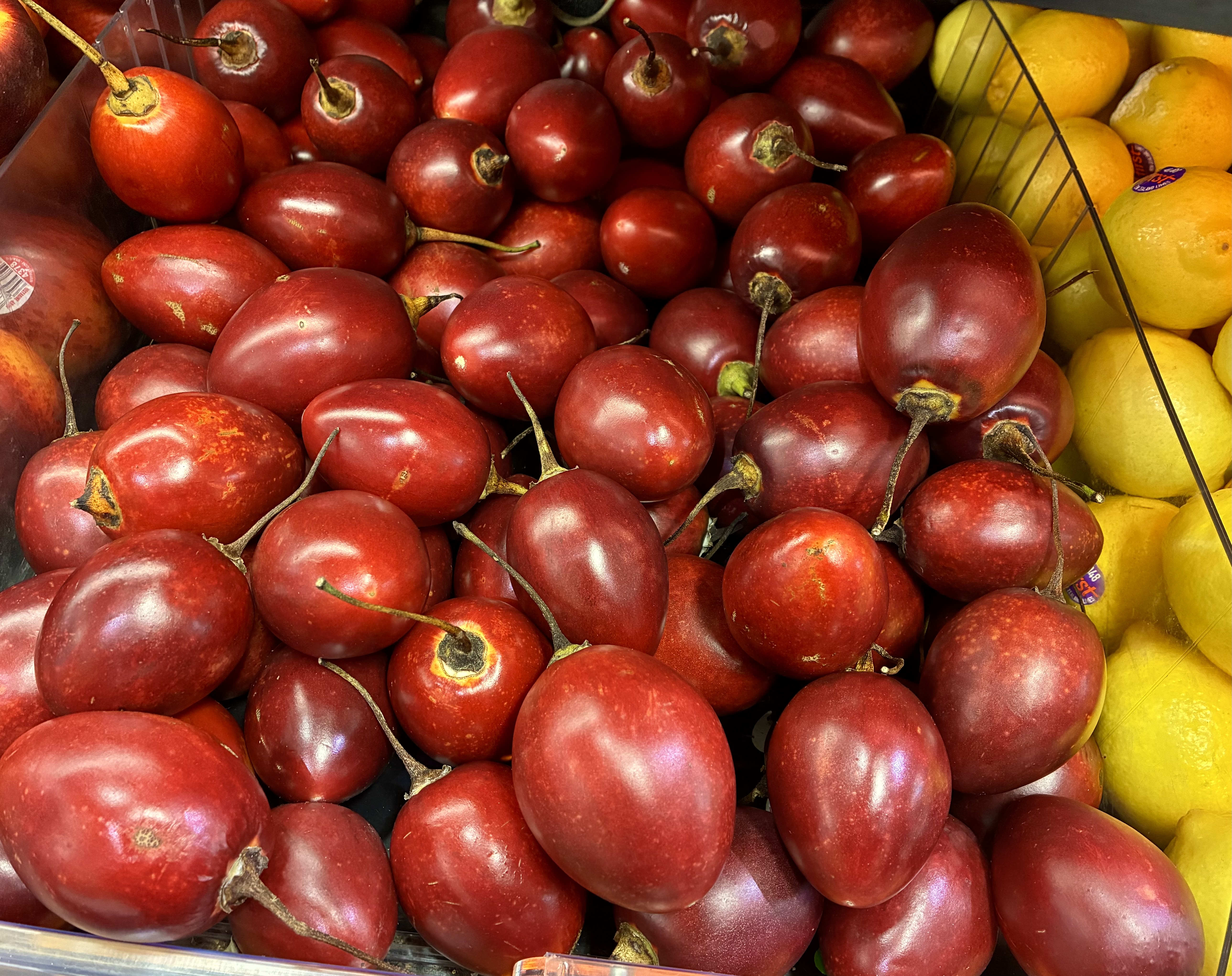
Tamarillos—sharp and sweet and utterly themselves.
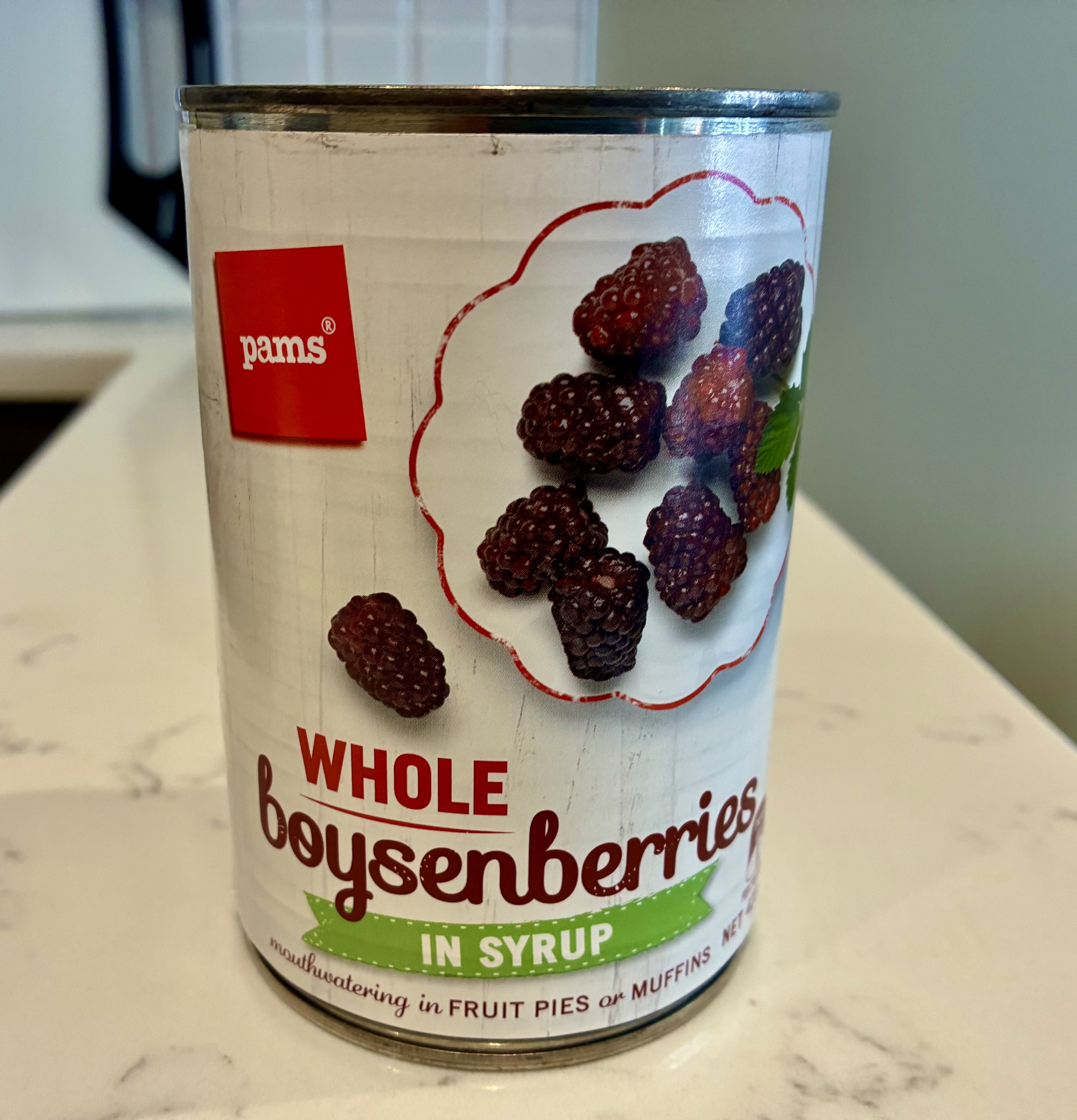
Or boysenberries. I love boysenberries, and they grow them here. My first choice is obviously fresh, but it’s the wrong season. Second option is frozen—no luck there. So tinned is the only way to get my boysenberry fix.
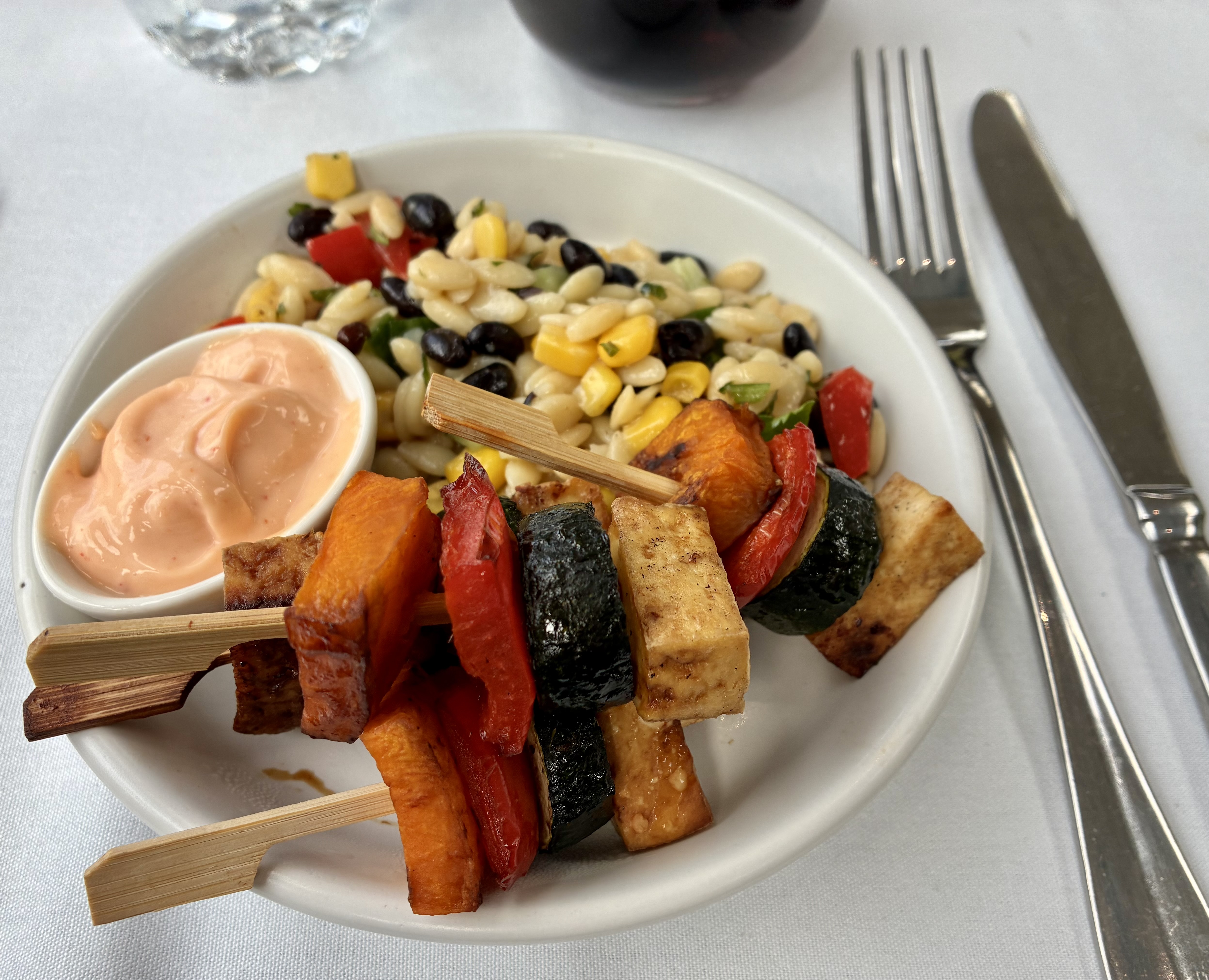
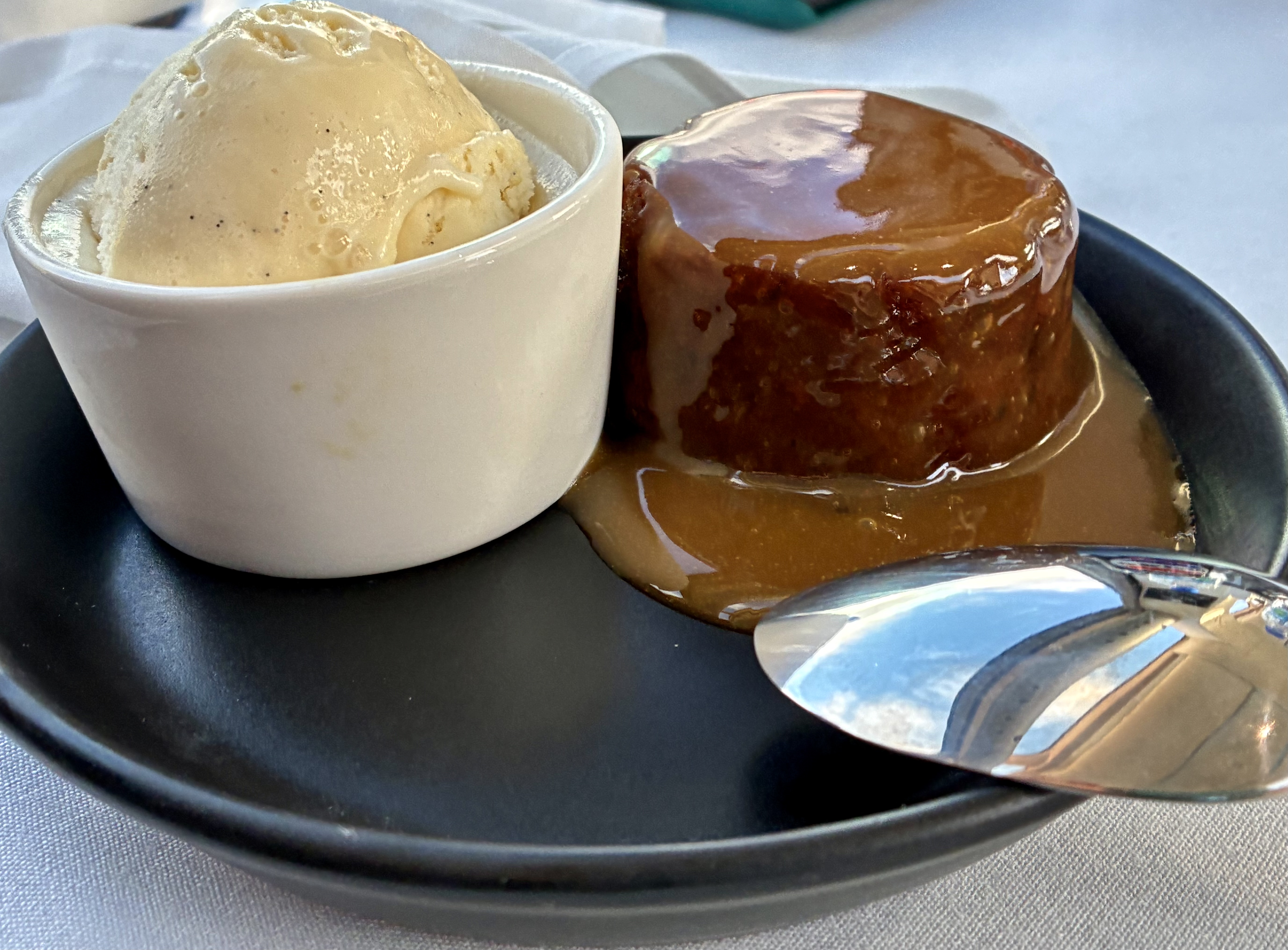
Or. The delicious food I was served on the Northern Explorer, the train that runs from Auckland to Wellington. Forget all those jokes about awful railway catering—sandwiches curling at the edges, meat pies of dubious provenance, the lack of vegetarian options—the catering on this train was local (North Island) NZ produce, well cooked, served by exuberant hosts (who also treated us to Māori songs)—and abundant, seriously abundant. From a slice of feijoa loaf on boarding through breakfast frittata, lunch, a mid-afternoon cheese platter, dinner and a sticky date pudding with ice cream to finish. I didn’t realise when I booked the only available tickets for the day we needed to travel south, that this was a special, food-orientated service: Scenic Plus.
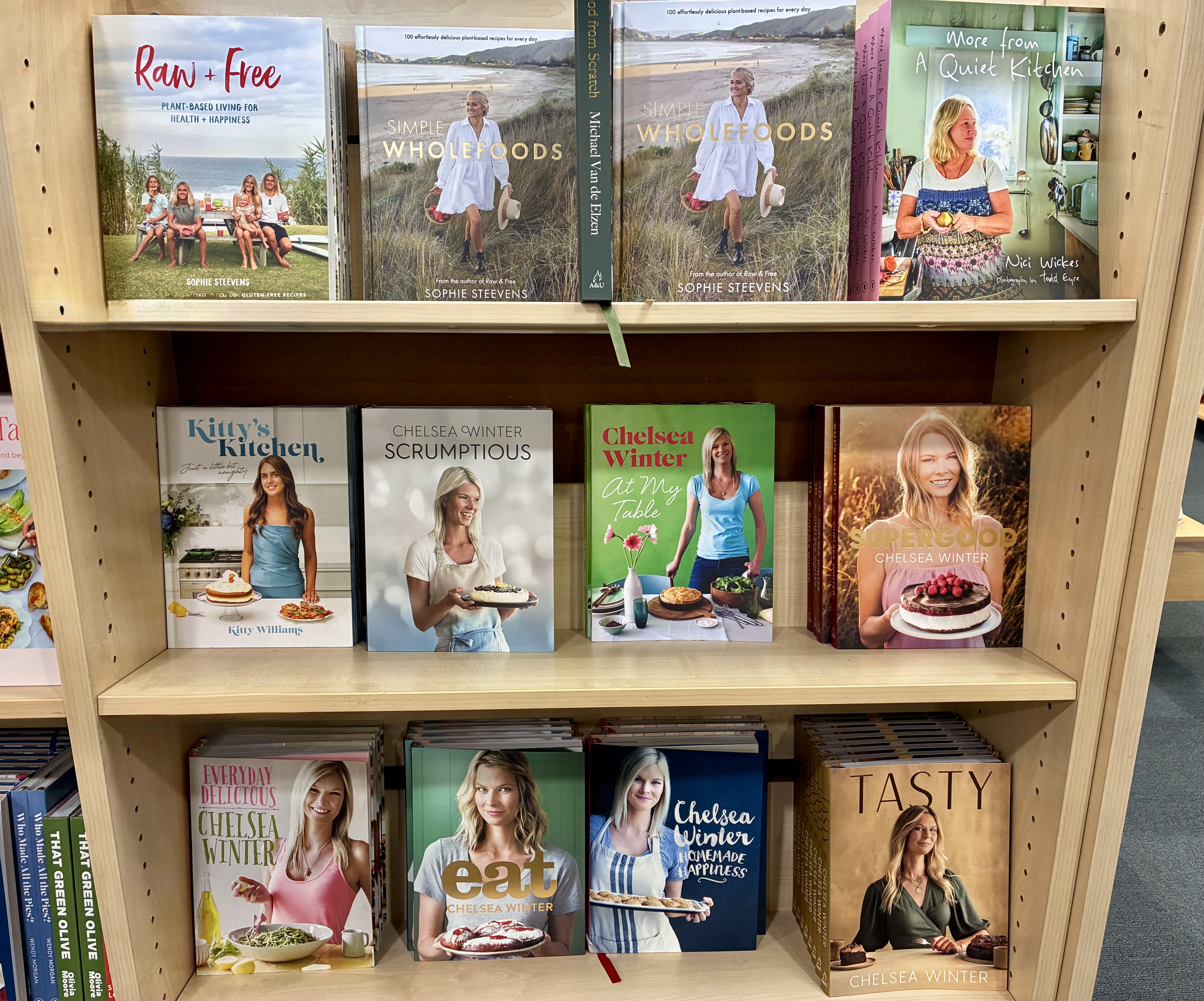
Or. This display I came across when browsing the cooking section of a Wellington bookshop. Every title has a cover that features a youngish woman with long, wavy blonde hair. Make of that what you will.
Australia’s first herb farm—maybe

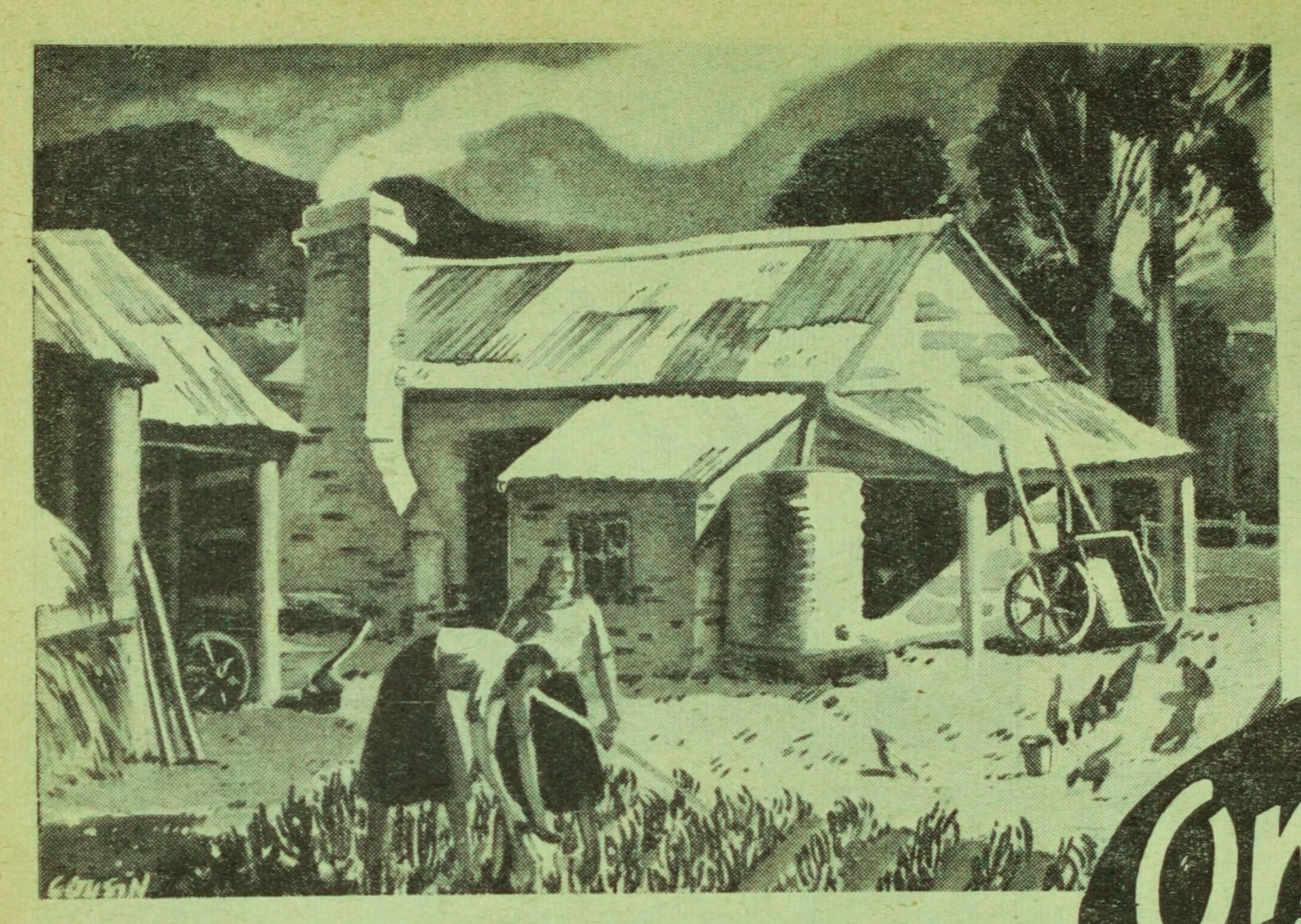
It was probably Australia’s first herb farm: The Wilderness. Established circa 1939 by two women, Winifred Watsford and Helene Paterson. Miss Watsford, a school science teacher, had long been a keen gardener. Miss Paterson, a fellow teacher and now her partner, shared that passion.

Before large-scale cultivation and retail, herbs were grown in individual backyards and commercially-sold seeds were usually imported.

In a magazine the Misses Paterson and Watsford read about a herb farm near Sevenoaks in Kent run by women, and began a correspondence with its owner. In 1938 they travelled to England where they worked on the Kent farm through the different seasons, preparing and planting cuttings, harvesting lavender, drying and preparing the various herbs for use. And experimenting with them in the kitchen.

A year later the couple, their luggage full of assorted packets of seed, returned to Australia. (Back then biosecurity was obviously a more relaxed affair.)

With the know-how they’d acquired in England they transformed six and a half acres of virgin bushland on a hillside at Warrandyte near Melbourne into the first herb farm of its kind in Australia.

This story brings together many of my ongoing interests—botany, matters culinary, queer histories and more. I’ve gathered a fair amount of preliminary research material about these two women, their social circles, and their herb farm. Exactly what I’ll end up writing about them and whether it’ll be for the page or stage or even audio or something else … well, I’m still mulling over the possibilities.

Old cookbooks—what’s in them and what’s missing …

I’ve been looking through an array of historic cookbooks, Australian ones in particular. Which means titles from the later nineteenth-century to the mid-twentieth. Because ‘old’ is not so old here when you’re talking about publications. Books about First Nations foodways are a relatively recent addition to our culinary shelves.

There are many ways of reading a cookbook. The ones I’m looking at are top heavy with cakes—large, small and special occasion, biscuits, scones, sweet puddings and confectionary. Most have a segment on Invalid Cookery which gets me wondering: are contemporary ‘dietaries’ (gluten-free, lactose intolerant, etc) the twenty-first century equivalent? There’s a lot of boiling and a number of surprising vegetable inclusions—salsify and pigweed, for example. Even mangelwurzel—which sounds like a character from Harry Potter, but is part of the beetroot family.

But it’s what’s not there that interests me. Mushrooms for instance. Some of these cookbooks have not a single mention, let alone any recipes involving mushrooms. Something to explore further given my fascination with all things fungi …

Several of these older cookbooks have been digitised and you can read them online. Here are the links to a couple:

The Kingswood Cookery Book by H F Wicken
Harriet Frances Wicken published the first edition of her Kingswood Cookery Book in London in 1885. A revised, Australian edition of her book appeared in 1889 and went through six editions to 1913.

The Antipodean Cookery Book and Kitchen Companion by Mrs Lance Rawson
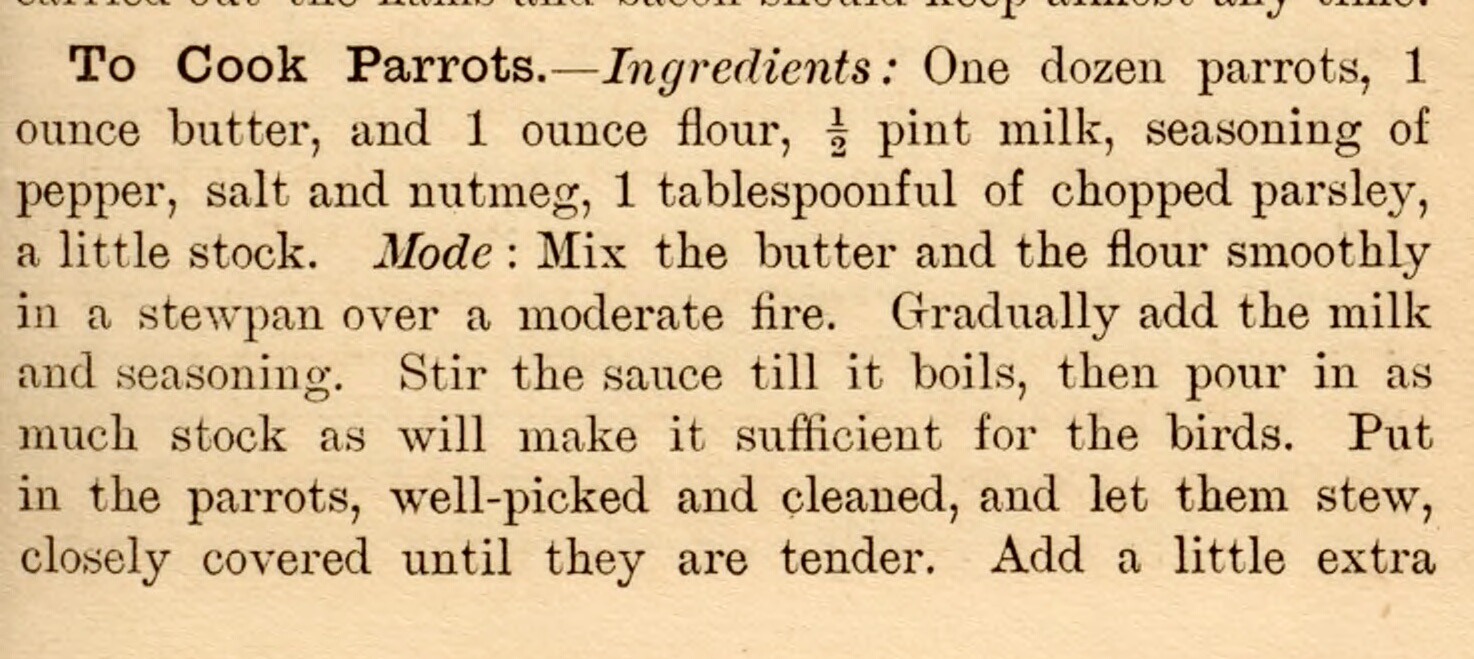
Wilhelmina (Mina) Rawson is recognised as the first female cookbook author in Australia. This book, published in 1895, includes instructions for cooking parrots, sand eels and ‘excellent wallaby soup’.

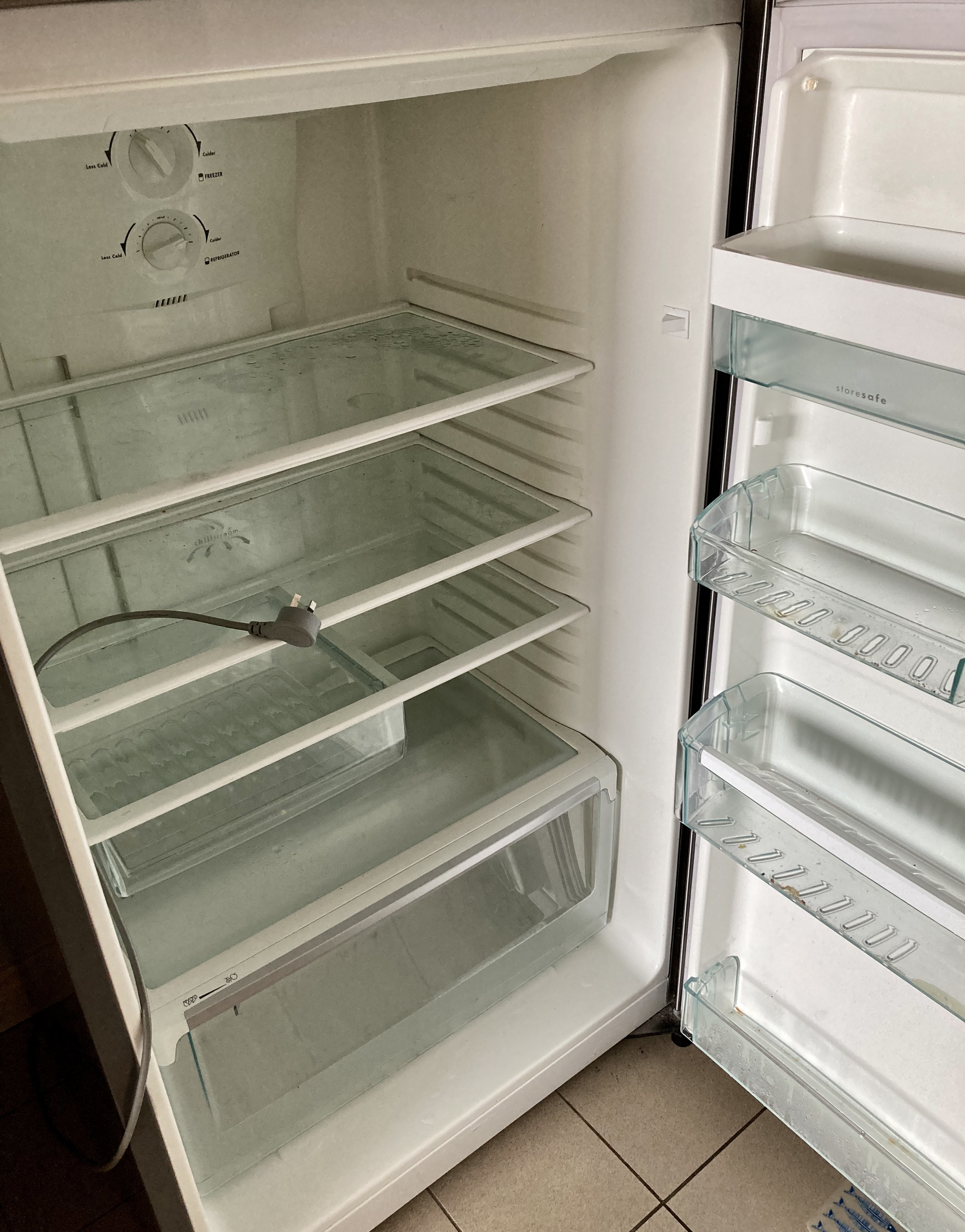
When the fridge died

Of course it happened in the small hours of Friday morning. Of course it happened not only in summer, but during a mini heatwave. Our fridge stopped working. I discovered this about 8:00 am when I went to add ice cubes to my water bottle and found the tray awash and the freezer contents squishy.

The fridge was old. Over the years a few bits snapped off and it acquired the odd small crack, but it was such a reliable workhorse. We knew its days were numbered, we knew we’d need to replace it sooner rather than later. But still.

I bought the new fridge online. Where we buy everything these days. The earliest it could be delivered was Tuesday. It was Friday now—that meant four days without refrigeration. Not ideal, but we’d manage … wouldn’t we? After all millions of people in many parts of the world don’t have access to cold storage.

The world’s first ice-making machine was invented in the 1850s by James Harrison, a Scottish-born Australian. A process with huge implications for food, medicine and science. ‘Ice within the tropics will soon be looked upon as a necessary of life,’ ran a report in the Illustrated London News in 1858.

Our sad old fridge

Nothing in the defrosting freezer compartment was salvageable. I cleared it out. As for the fridge, by Friday afternoon the butter was runny, the cheese soft, the beer warm and the yoghurt on the turn. Anything unopened was kept, everything else went in the garbage; I shuddered to see all that food waste.

What I was unprepared for was how unsettling it was without a functioning fridge—and how much it disrupted our routines. We had to think through and plan not just meals, but every snack and every cup of tea. Without any means of cool storage we had to buy what we wanted to eat when we wanted to eat it. The milk we bought for breakfast had to be tipped down the sink after a couple of hours. I couldn’t make a cheese and tomato toastie unless I threw out the ingredients I’d just bought once I’d eaten it. It was a hot, incredibly humid weekend and in the end, we went out for dinner, we ate a lot of sushi, and the whole experience has prompted me to start re-reading Elizabeth David’s Harvest of the Cold Months The Social History of Ice and Ices.

The new fridge arrived yesterday. Yay! The delivery guys took away the old one. Hopefully parts of it will get recycled. At the bottom of a cupboard I found the original receipt—we’d bought our old model fourteen years ago almost to the day.

One last detail. If you’re interested in the history of refrigeration (I am) check out Frostbite: How Refrigeration Changed Our Food, Our Planet, and Ourselves by Nicola Twilley.


My inauthentic tinned strawberries

Tinned strawberries. It appears they’re extinct in Australia. I’ve looked in Woolworths, Coles, Aldi, IGA as well as a number of independent and specialist stores. Tinned peaches, pears, pineapple, cherries, even tinned lychees, but no tinned strawberries anywhere. Strawberry jam—yes. Fresh strawberries—also yes.

I jump into research mode. Once upon a time SPC produced them. And you may still be able to buy them in New Zealand: Pams Strawberries in Syrup, 410g. Pams has been a staple in Kiwi kitchens for more than eighty years. Apparently. You may also be able to order them online from retailers that specialise in British food. So tinned strawberries still exist in other parts of the world.

Strawberries are a summer fruit and their season is short. Although we can now buy punnets the year round, strawberries are at their fragrant best when picked during their summer fruiting.

Tinned strawberries were a childhood favourite. Enjoyed when their fresh relatives were unavailable, sometimes even the preferred option … Frozen berries weren’t as much of a thing as they are now. (English fridges had small freezer compartments with room for a block of ice cream, a packet of frozen peas and not much else.) And produce in supermarkets and green grocers was more seasonally aligned than it is in our age of food imports and air miles.

This may be an unreliable or blurred memory, but my recollection of those canned strawberries is that they were considerably smaller than the golf-ball-size fruit that’s common today. Polish distinguishes (I think) between the regular strawberries you buy from shops, truskawki, and their wild ancestors, poziomki, which are tiny and super tasty. They grow in woodlands and rural edgelands, and if you’re not up for foraging yourself you may be able to find them for sale at local markets.

I don’t know why I’ve developed a craving for tinned strawberries, but I have. And as I can’t obtain them any other way I’ll have to make my own. I wash about three-quarters of a kilo of fruit, cutting larger specimens in half. Tip them into a pan with a squirt of vanilla paste and a scant teaspoon of strawberry jam and cook on a low heat until they reach the desired softness. About six to eight minutes. And there they are—my inauthentic tinned strawberries.

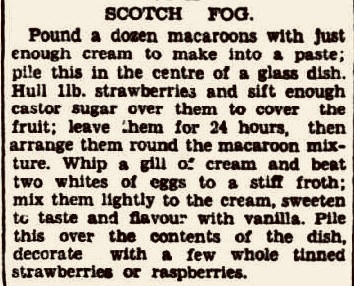
Finally, I couldn’t resist this wonderfully named recipe—an adaptation of Eton mess—that I found in a Queensland newspaper from 1932: Scotch Fog.

Nuts, crackers, fruitcake & bananas

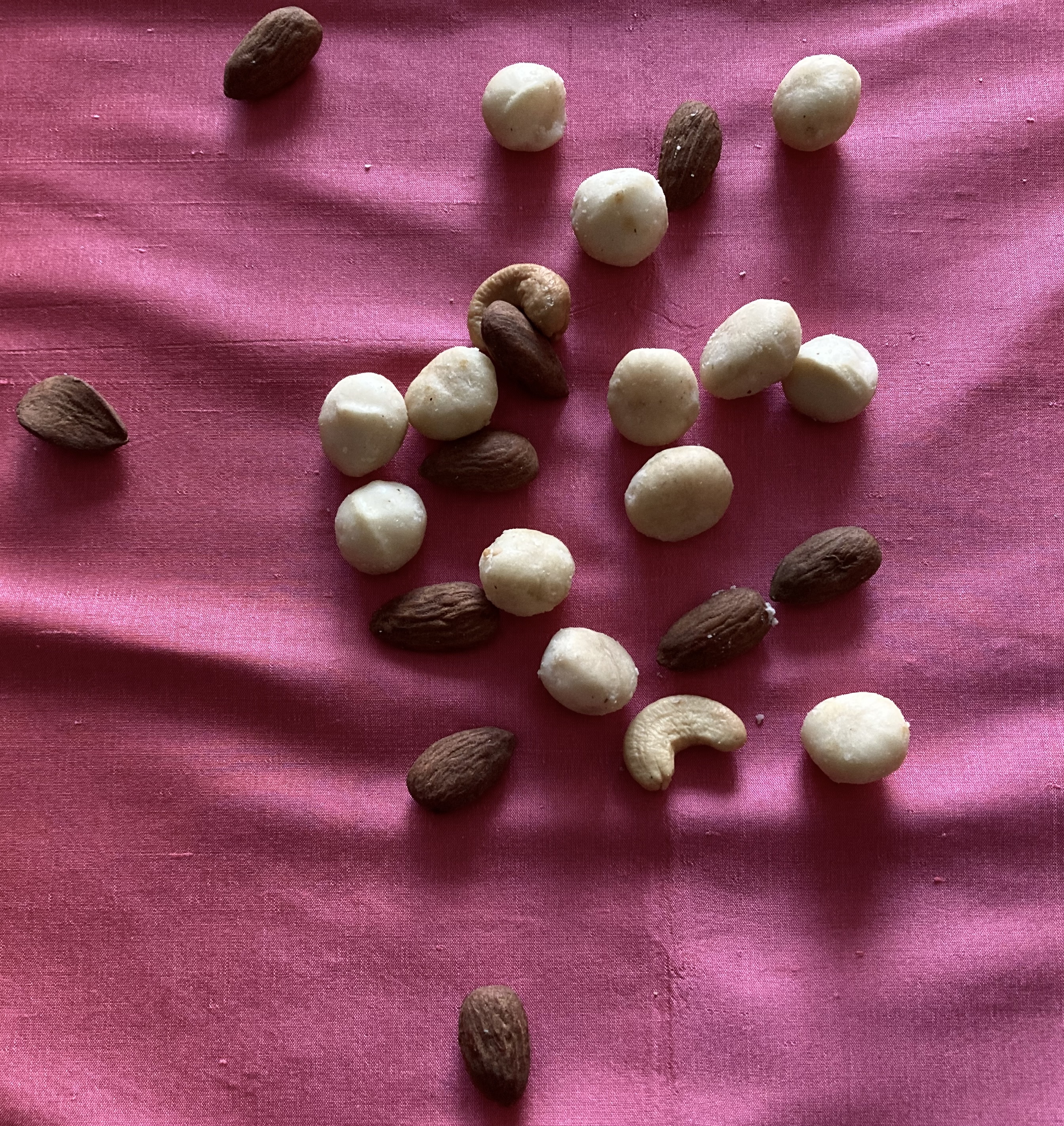
Thinking about the language we use around mental health, I was struck by the number of foods in the lexicon. Nuts. Crackers. Fruitcake. Bananas. A few sandwiches short of a picnic. All used to describe someone’s mental acuity, eccentricity or level of sanity. Fruits and baked goods. (Nuts are fruits. A particular kind of dry fruit with a single seed and a hard shell. Except peanuts, which are legumes and therefore, botanically speaking, a vegetable.) Vegetables don’t feature in the food/mental soundness vernacular. ‘Are you carrots?’ is a question asked by no one.

How did this food-related vocabulary become shorthand for mental illness? Go online and various explanations pop up. The one that catches my eye (because I’ve been researching and writing about ‘queer’ vegetables) is that most of these slang terms were previously related to (male) homosexuality. Which in the nineteenth- and early twentieth-century was widely considered a disease.

In the beginning—i.e. the first decade or so of the last century—fruitcake meant an unconventional or odd character. By the 1930s it was a derogatory term for a gay man. As was banana, meaning bent. (Before bananas became used as a description of a someone Asian in their outward appearance but white on the inside.)

There’s also rum. The adjective not the drink, meaning odd, strange or queer. As in: He’s a rum fellow. Not necessarily LGBTQ, more a colloquial way of saying that someone is on the unusual or quirky spectrum. According to etymologists rum the spirit and rum the descriptive word cannot be separated.

Back to fruitcake. For reasons that elude me, a food much maligned in America. Light fruitcake, dark fruitcake, rich fruitcake, experimental fruitcake, fruitcakes with just one or two dried fruits or fruitcakes with the lot—I like them all. And that’s how I came upon this wonderful essay, How—and Why—Did Fruitcake Become a Slur? by Mayukh Sen, author of one of my favourite recent food books, Taste Makers: Seven Immigrant Women Who Revolutionized Food in America.

Dill and discoveries

I’m deep into dill at the moment—both cooking- and writing-wise, so this is a short post.

Prof. Dr. Otto Wilhelm Thomé, Flora von Deutschland, Österreich und der Schweiz 1885.

I’m interested in adaptations and culinary hybrids. In recipes and dishes that trumpet their inauthenticity. ‘Supermarket aisles keep filling with edible mash-ups between major brands—but do any of them actually taste good?’ asks an article in the Sydney Morning Herald. The examples they give (which sound like something kids might come up with) are commercial collaborations, dreamed up by adults in marketing departments to bring together well-known brands to create—well, something. Novelties that combine both manufacturers’ products, no matter how unappetising—and unneeded—the end result.

The cross-pollinations I like most arise from individual experimentation, changed circumstances, environmental concerns and conversations across cultural and culinary lines. A recent discovery was this chai lamington from the Holi Crop café/bakery in Sydney’s northern suburb of Turramurra. It’s a delicious, Indian-influenced take on the traditional lamington.

MacArthur Park (and other cakes in songs)

Given this is a cakey time of year perhaps not so surprising then that I woke up the other morning humming MacArthur Park. A song I haven’t heard for ages and one I always (mis)understood to be a heartfelt lament about a baking disaster.

MacArthur’s Park is melting in the dark
All the sweet, green icing flowing down
Someone left the cake out in the rain
I don’t think that I can take it
’cause it took so long to bake it
And I’ll never have that recipe again … ‘

After waking up to the tune of MacArthur Park I clicked on Spotify to hear the actual song rather than my garbled remembering of it. It’s been recorded by lots of artists, but the two best-know renditions are probably Richard Harris’s 1968 interpretation and Donna Summer’s a decade later.

Fist thing I notice is Jimmy Webb’s composition is musically quite complex. And the song is actually about a relationship break up. Donna Summer’s disco version hits the high notes and that works. Richard Harris kind of acts it—and that works too.

There is a MacArthur Park in Los Angeles; and in a 2014 interview Jimmy Webb explained that the lyrics recorded what he saw in the park where he and the ex used to meet for lunch. Yes, there was green icing, there was a cake, and yes, it was rain-soaked. The missing recipe represented lost love. Or something like that.

For me though, MacArthur Park will always be about the cake.

There are myriad songs abut alcohol (UB40, Red Wine; Chumbawamba’s fabulous Tubthumping) and drugs (Jefferson Airplane, White Rabbit; The Velvet Underground, Heroine). And there are songs whose titles sound as if they might be about food, but aren’t. American Pie, for example, and The Beatles’ Strawberry Fields Forever, which is about a tough childhood. But a little light Googling and I found a surprising number of musicians singing about the consoling delights of cake, especially chocolate cake (Crowded House, Melissa Etheridge, and many others). And of course there’s the the deliciously named Melbourne band My Friend the Chocolate Cake, whose music I’ve always liked.

I find green icing unappealing, a bit kids’ birthday partyish, but after listening to a stack of cake-related songs, MacArthur Park remains my favourite. Although I do have a soft spot for Johnny Cash’s Strawberry Cake, a ballad about a hungry homeless guy in New York who steals a huge cake from a ritzy hotel.

Beefs, gripes, quibbles

Nothing meaty here, simply a bit of a lament and couple of questions or quibbles—which sound like a grain, as in a bowl of rice and quibble or how about a tomato, feta and quibble salad?

My first question or quibble is why are almond croissants so often over-baked? OK, not the kind of question to keep one awake at night, but still … a question I’d like answered. Someone recently told me it’s because most almond croissants are made from yesterday’s pastries, or the day before yesterday’s. The old croissants are split open, filling spread inside, flaked almond scattered on top and then into the oven they go for a second baking. If that’s true—and I don’t know if it is—no wonder they’re so often hard and dry. And BTW a heavy dusting of icing sugar is more giveaway than disguise.

Now for the lament. I don’t know if this is an Australian thing or a uniquely Sydney thing, but it’s really hard to find a café open past 3:00 pm. I want to meet a friend or colleague late afternoon but in my local suburb the cafés have all shut up shop for the day. And if’s not much better in the CBD. A handful say they’re open until 5:00 pm—which means from 4 o’clock the staff are clearing up, putting chairs on tables, mopping floors. Low-key-challenging customers to keep sitting there until the advertised closing time. Look, I get it, staff have probably been there since early morning; they want to go home and get on with their own lives.

But still …

Such experiences—who wants to sip an iced coffee while a waiter sprays cleaning fluids around you?—invariably get me thinking of London where cafés stay open evenings. Sure, a lot of them are chains like Costa, Pret a Manger and Caffè Nero, but they’re open, trade is usually pretty brisk, and although I’m not generally a fan of chains, I’m starting to wish we had them in Sydney.

Don’t want to end on that rather sour note, so here’s a photo of my sweet and delicious tomato and mushroom biryani. It’s a Rukmini Iyer (India Express: Fresh and Delicious Recipes for Every Day) recipe with a couple of tweaks.

Katherine Mansfield’s tomato soup

Tomato soup took me to Katherine Mansfield’s Bliss. The story chronicles a day in the life of Bertha Young as she prepares for, and hosts, a dinner party. Among the invited guests is Berth’s new ‘find’, the sleek and silvery Miss Fulton.

‘What was there in the touch of that cool arm that could fan—start blazing—the fire of bliss that Bertha did not know what to do with?
   Miss Fulton did not look at her … But Bertha knew, suddenly, as if the longest, most intimate look had passed between them—as if they had said to each other: “You too?”—that Pearl Fulton, stirring the beautiful red soup in the grey plate, was feeling just what she was feeling.’

Food permeates Katherine Mansfield’s writing. It’s everywhere—in her notebooks, in her correspondence and in her published prose. If you’re looking for some literary nourishment, there’s a gloriously detailed essay Eating and Reading with Katherine Mansfield by Aimée Gasston that was published earlier this year in the ever wonderful Public Domain Review.

Later in the story, another guest, an up-and-coming poet, wants to show Bertha a verse that opens with the line: Why Must it Always be Tomato Soup?

There are many kinds of hunger. While Bertha watches her husband and Miss Fulton—the woman she’s flirted with all evening—arrange a secret assignation, the poet continues:

‘Why Must it Always be Tomato Soup? It’s so deeply true, don’t you feel? Tomato soup is so dreadfully eternal.’

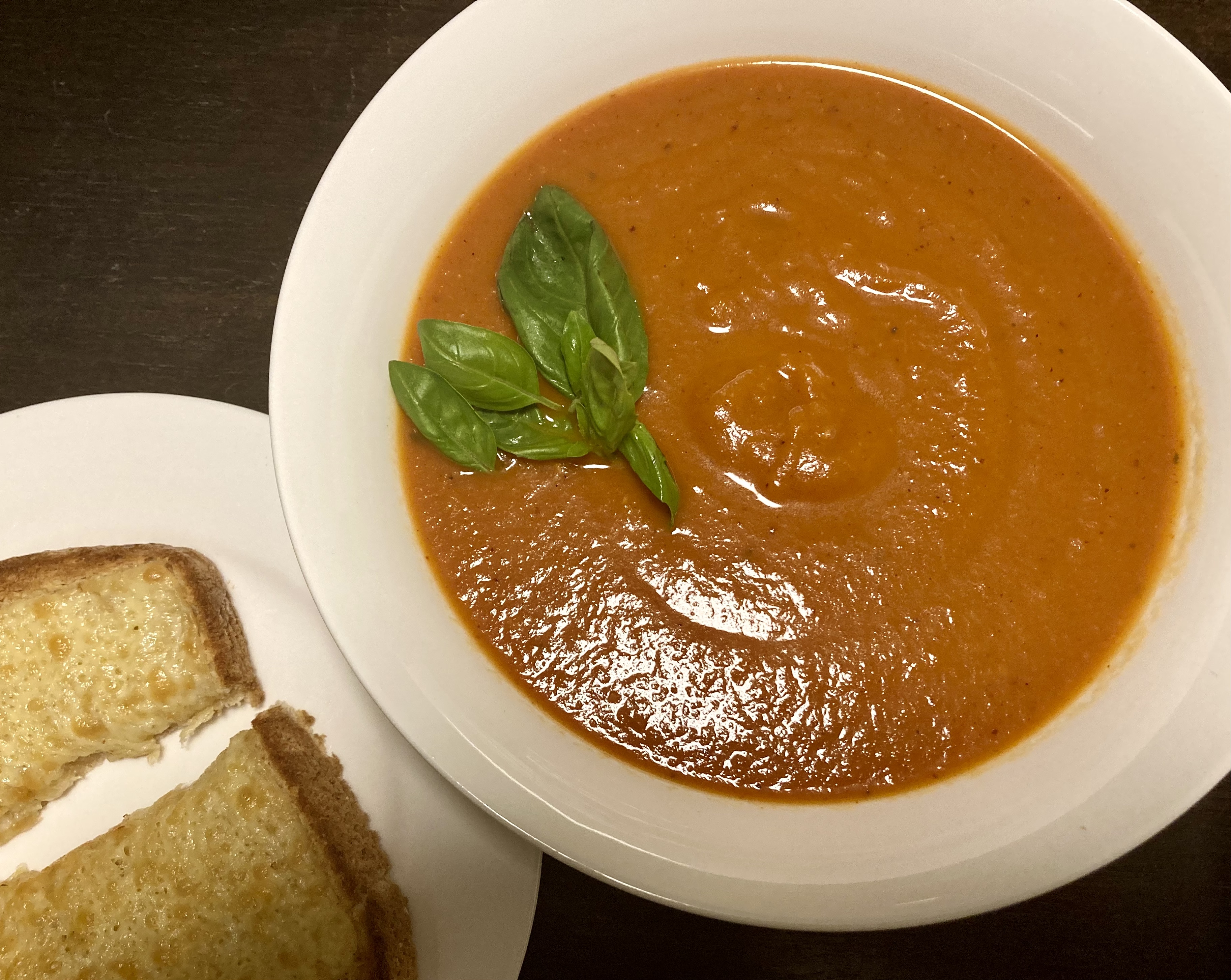
I don’t know about eternal but tomato soup is one of my standby dishes. Lots of fragrant fresh tomatoes, a small carrot, an onion, a stick of celery, a clove or two of garlic and a red capsicum. Spice and/or herb to taste. Perfect for a winter supper with grilled cheese on toast.

Moving on

My question here is not why must it always be tomato soup, but why is soup of the day always pumpkin?